Showing posts with label LIFESTYLES. Show all posts

Tuesday, April 14, 2009

Muggle Quidditch: Growing in Popularity

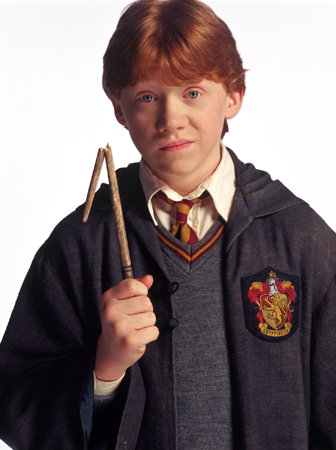
"Weasley cannot save a thing, he cannot block a single ring, that's why Slytherins all sing, Weasley is our king."

This is the boisterous chant of the Slytherin team, J.K Rowling's depiction of the bully-based squadron whose primary goal in the Harry Potter series is to rub Gryffindor's noses into the ground every conceivable moment at Hogwarts School of Witchcraft and Wizardry.

Breaking it down for those who have not bothered with the collection, the chant is derived from what escalates during the fictitious Quidditch, the school's seasonal sporting event, where flying brooms are mandatory and one specific player, the Seeker, must grab a flittery-winged small golden ball to win the match.

If imitation is the highest form of flattery, Rowling should be thrilled: Quidditch has now become an actual sport. Brooms and snitches don't elevate from the ground, but that doesn't stop these imaginable Potter fanatics from attempting to live out their storybook glory.

As the fan base strengthened in numbers over the past decade, so did the potential of establishing the earthbound variation of Muggle Quidditch.

"A lot of people don't realize is there's this whole underground scene," said Jennie Steinberg, a resident of Los Angeles, on the phone. A student shooting for her masters in Marriage and Family Therapy at CSU Northridge, interested in Harry Potter, wanting to play a fake sport?

Just as other groups associate their flockings with the addition of '-head' onto a word that's spoken most and widely known - indeed, Mr. Potter has captured the young spirited hearts of every country, establishing themselves as Potterheads.

"If you're a Potterhead, you get the same response when bringing up Harry Potter in non-Harry Potter circles, 'Oh yeah, I read book one and it was okay, and I've seen some of the movies and they're alright,'" said 25-year-old Steinberg. "That used to be my response too."

While the series first debuted in 1997 and now up to date has sold over hundreds of millions of Rowling's seven books combined, Steinberg didn't start reading them till three-and-a-half years ago. "When I first started dating my boyfriend, he told me that I needed to read them," said Steinberg. "If I wasn't going to do it on my own, he was going to read them to me."

Steinberg was hooked: for the first six months or so of the relationship, her boyfriend read the books aloud to each other every night. When the final installment: HP and the Deathly Hallows came out, Steinberg joined in, and they both read the chapters.

Setting out to find others who enjoy the same, Steinberg began attending 'Wizard Rock' concerts, a new genre of music dedicated to Potter. " They
did an amazing job of drawing from not only the characters and the humor, but also the emotions and the wonderful lessons," she said. "That is what I think brings me back to the books."

From The Remus Lupins to the Whomping Willows, Steinberg started attending more shows on the quest to seek out others such as herself. "I was frustrated with my lack of Potterhead friends," she declared.

After having spent a night dining with six other fans post concert, Steinberg kept in contact with them online. A couple weeks later, she read her new friends had requested a game of Muggle Quidditch. Jennie jumped on the prospect, messaging them and insisting that they invite her.

Told to 'Bring Your Own Broom' and chip in a few dollars for a BBQ, Steinberg showed up at a house with a broom in hand. "A girl ran out asking if I was there for Quidditch," Steinberg said. "I joked, 'Nope! I'm here to clean your house.'"

Walking into the backyard, she noticed the set-up of mid-air hoops, which were really just hula hoops duct-taped to PVC pipe held up by sand in buckets. A pair of three hoops sat on each end of the yard, and people were already there scrimmaging. Using a volleyball as a Quaffle, they were thrown into the opposing side's hoops for points.

Sometimes the adaptions are interesting. "The snitch can be a moving person, or a remote control car and helicopter," Steinberg said. With attempts at Quidditch as a water polo sport and rigging up a harness to fly, Potterheads always envision new creative ideas.

Steinberg was ready to play. Chosen as a beater, her job was to throw dodgeballs at the chasers, who are attempting to throw the volleyballs into the goals. "It was very high intensity," she recalled. "There is so much going on in the game, it was really chaotic and fun."

Many U.S. universities are now involved in a Intercollegiate Quidditch Association, and several attended the 2008 Quidditch World Cup, as also the sport is growing recognition in youth camps worldwide. It even prompted Greg Gumbel to go do a play-by-play of a Quidditch tournament for CBS News a year ago; that is when the Muggles of the real world finally learned of Quidditch.


There won't be any spells flying around, either. "I may have tried to use the summoning spell to steal the bludger," Steinberg said. "Accio!"


Tuesday, February 24, 2009

Spinning In the Fish Tank

Walking through the student center of Central Connecticut’s campus, a large glass window draws curiosity to each passerby.

Peering inside, guiding one’s eyes around the room of expansive radio equipment, there in the center sits a brown banged petite girl with headphones on. As a song ends, she fiddles with the soundboard, presses a button, and puts her mouth next to the microphone.

“You’re listening to WFCS 107.7,” said a calm, serene voice. “The name’s Kait Jensen, and welcome to my show, Strange Sounds,” she finished.

Immediately after the last syllable, Jensen punched another button, and the first notes of a song began to resonate through the station. As a junior majoring in English, Jensen has been working at CCSU’s radio station for over a year. Currently sporting the title of Alternative Director of WFCS, Jensen hosts her own radio show on Wednesday nights from 8-10 p.m.

Heavily involved in the station, Jensen is also currently training to become the Director of Development, as well as the treasurer position for next semester. Jensen enjoys the power she possesses as she switches from song to song.

There is more freedom in college radio than [in] commercial,” she said. “Students can listen to music they wouldn’t hear anywhere else.”

With a heavily influenced mélange of indie favorites like Neutral Milk Hotel, Caribou and The Pixies, Jensen fills the airwaves with unique sounds.

“I get phone calls occasionally,” she said. “But they’re generally from people asking me to play Coldplay,” she said, as she usually tries to steer away from mainstream favorites. As Jensen frequently stops to give the tag line and play public service announcements, she doesn’t seem to get nervous about her voice reverberating through the hallway of the Student Center – where hundreds of students and faculty stop to curiously peek inside as they scamper back and forth from classes.

“Sometimes I get reactions through the window,” Jensen said, referring to the fish tank. “I like to press buttons when people walk by and I get weird looks,” she laughed as she demonstrated by pressing a button that let off a screaming noise.

Outside of the station, Jensen is also currently attempting to organize shows to take place on campus, trying to bring bands in an effort to get students more involved in supporting their student organizations, and to just have fun. Presently, the station is undergoing a lot of improvements, as they hope to use another vacant room adjacent to the main station to showcase local bands, treating their listeners to live performances.

With many individuals currently working to keep the station afloat, WFCS is constantly putting their heads together to explore new ideas to revamp the studio and keep radio alive. “It sounds like such a cliché thing to say, but we’re like a family,” Jensen laughed, “ – an interesting one, at that.”

Wednesday, April 2, 2008

Staying Connected: After 31 years, four CCSU grads have remained close and reminisce about their days on campus.


“We used to keep our beer cold in the window,” laughed Pam LaCharity as she sipped a glass of wine. “Only the rich kids, like Nancy, had refrigerators,” Colleen Kubinsky said as she pointed at her friend Nancy King. Robin Gooch began to chuckle, and the women dissolved into a fit of laughter.
For 31 years, these four CCSU alumni have been meeting for an annual lunch to catch up with each others' lives, and to revisit and remember the memories. “We've all gone different roads in our lives, but we've always been together,” said LaCharity.
Nancy King and Pam LaCharity had once went to high school together, but their friendship did not solidify until they roomed in the 'once upon a time' all-girls dorm of Seth North. It was there that they had met Robin Gooch and Colleen Kubinsky; and the quartet was established.
Central was, during the 1970's, a wet campus. A pub used to reside inside the student center, and it was always packed. “A line used to snake out the doorway; as each person left, they took someone in,” recalled LaCharity. The ladies had VIP access, all thanks to a friend who had worked there. Two dollars pitchers of beer were enjoyed as movies graced the screen of the pub every Thursday night.
Campus mainstay Elmers was around back then, and doubled as a strip bar. A pizza joint called Belvedere Pizza was nearby, and the ladies would walk there to grab a few slices and have a good time. With three out of the four not having a car, anything within walking distance was a sure-fire check off of the 'things to do' list of Central happenings.
Imagining a time before cellphones, computers, and Facebook may be difficult for some, but for these women, college without these gadgets was not a disappointment. “You had to go out to socialize,” said Kubinsky, a 1976 education graduate. “We traveled in packs.”
Every dorm at Central used to have parties; they would hire a DJ, get a keg, or would make a nice big barrel of 'Purple Jesus.' “People would bring the hose in and fill a garbage can full of water, a can of Kool-aid, and a ton of grain alcohol, then turn around and sell tickets for two bucks a cup,” said LaCharity, a 1977 education graduate.
Semi-formal dances, called functions, were also held for each dorm every semester, giving everyone an excuse to dress up like the prom and dance the night away. “Some of our fondest memories include us getting ready for the functions in our rooms together; sometimes we'd just take the whole day off from classes to do so,” said Gooch, a 1977 business graduate. The invitations would not forget the most important ingredient to the night however, and would mention the most popular initialism in a college setting: BYOB.
As I sat with these four cheerful “bitties” (as Gooch referred to them as) they showed me pictures of them dressed up at functions, parties, for Halloween, and their graduation days. Each photo had a particular story, and a laugh or two to accompany it.
“Partying was a part of our life, but within reason,” said Gooch.
“It's pretty amazing that any of us graduated,” laughed Kubinsky, and the others followed suit.
CCSU in the 1970's was considerably different: technology was undergoing changes, security wasn't an issue, and students weren't the stressed out multi-taskers they are today. Students wrote their papers on typewriters, the main doors to residence halls would stay wide open until late at night, and when they were not partying, students went to class, and worked 10-15 hours a week to hold up their discretionary funds. “There was no need to drive off campus,” said Kubinsky.
Primitive methods of the yesteryears have been replaced with easy clicks of the mouse on the Internet. Picking classes, for example, used to be an ordeal. Students had to go to the student center, get in the line of the department the class is in, and get a card punched. Today, e-mail makes contact with professors a quick, impersonal act, while before computers, students had to grin and bare it by walking to offices and having face to face conversations, although meetings such as these are still welcome.
Simply put, there were no individualistic luxuries. Students typically did not own the common technological devices that today's students take for granted, whether it be a computer or television set. With one television being in the basement of an entire residence hall, or one major movie being shown in Welte Hall, these were the moments that students came together to enjoy a good flick, and some great company.
The four recalled some loopier memories, in which they spoke of the ridiculous stunts boys would pull to get attention. “Guys used to come out of their buildings and streak naked, and go flying across campus,” said Kubinsky.
“Some of the boys who lived in Vance owned tarantulas,” said LaCharity.
“Then there were the pranksters who would shove pennies in our doors, and we couldn't open them,” said Kubinsky, proving that boys will be boys, even to this day.
Certain residence halls had different reputations, as well. “Beecher were the pot heads, Vance were the jocks, Gallaudet was co-ed, Barrows were the elite girls, and above all, Seth North was home to the nicest people,” said Gooch, recalling her own residence dorm.
Dorm life was always abuzz; residents would hang outside of their rooms, using the hallway to its fullest advantage. “We'd sit in the hallways to study and support one another,” said LaCharity. A phone booth existed in each hall, and was the only means of contacting the outside world other than snail mail.
While there was no such thing of a spring weekend, spring break was the time to take a bus trip down to Florida with a bunch of friends. “We would drink beer on the bus, and then drink grain alcohol out of the hotel room tub,” recalled Gooch.
Once the four graduated, they were adamant about keeping in touch, and thus established annual get-togethers. “When we began doing these, we'd laugh and say, 'Wait till we all get married, wait till we all have children,' and now we're at the point where our children are getting married. Now we're saying, 'Wait till we're all grandparents.' Every time another milestone rolls around, we're still together,” said LaCharity.
Gooch smiled and agreed. “Us getting together is a testament to the fact that the friends you make in college can really become lifelong friends,” she said. “Now that we're older, we drive more slowly, and drink finer quality wine.”
“Enjoy it while you can,”Kubinsky said in regards to college. “It goes by way too fast.”

Wednesday, March 5, 2008

Find a Friend at the Connecticut Humane Society


Some say the bond between human and pet is everlasting. In a world piled high with financial responsibilities, animals are becoming increasingly overlooked in the grand scheme of things. Relocation, debt, or long hours at work make people question their ability to take care of their feline and canine companions.

The Connecticut Humane Society has three different adoption centers around the state in Newington, Waterford, and Westport that take in animals that are of any size, shape or form. Giving up a pet can be a difficult task, but the humane society welcomes pets with open arms.

“Owners come in telling us they can no longer care for their pet and we take them in and find them a new home,” said the Society’s Public Relations Director Alicia Wright.

For prospective new pet owners, the humane society should be the first pit-stop. With an annual adoption rate of 90 percent out of 9,500 pets, it is almost certain that upon a visit, one will inevitably fall in love with one of the sweet, adoring creatures the society houses.

These unique, one-of-a-kind animals need extra love and care for what they’ve lived through; each has a separate story, whether it be a relocation, behavior, or medical problem. After an individual walks in and picks their new friend, the staff of the CHS has an interview with them to see if they are capable of handling the pet.

“We look to make a match be- tween the owner and the pet so we can avoid the pet becoming homeless a second time,” said Wright. “One of the main things we look for is if the person understands the basic financial responsibilities and what kind of experience they have with animals.”

Wright made a strong point of calling these relocations “forever homes,” because that is the main emphasis; it would be heartbreaking for the animal to end up back at the society.

The pets at the three facilities come from all over the state of Connecticut, and some picked up from animal control. CHS has also been working with a few shelters down South, where there is a very high rate of euthanasia.

An overwhelming pet overpop- ulation problem exists in the southern states. “It is just insurmountable,” said Wright, who spoke of the lack of access to veterinary care. “It is more difficult for people to practice spay/ neuter.” Shelters are faced with growing numbers of animals trying to find homes, and in worst case scenarios, have to euthanize healthy, adoptable pets.

“We started to work with them to expand our outreach services, have more animals available for Connecticut residents, and above all, place more animals for adoption,” said Wright. The Connecticut Humane Society is also paying certain veterinarians down South full salaries to educate them on how to spay and neuter in hopes of decreasing the problem.

Endless success stories pile into the humane society and are chronicled in books available to owners upon their visits to read and be inspired from.

One of the more recent success stories involves an older woman crippled with the passing of her pet and with her own medical problems, which were causing her to become too much of a homebody.

She visited one of the locations every day in hopes of finding a new friend. “Our staff continued to work with her, and one day, it just happened,” Wright said. “She came in, the perfect pet was there, and she adopted it.”

Since then, Wright told of how the pet helped the woman become more involved in her community. “We gained an amazing friend,” said Wright. “She gained a new pet and a renewed lease on life.”

The big question on most perspective owners’ minds might be, how much are adoptions? Puppies ($110) are the most expensive, while kittens are $100, adult dogs are $80, adult cats are $70, and small animals are $30. The cost includes spay/neuter, vaccinations, and if the animal came in with health conditions, they are stabilized or cured.

Now with that said, you may be planning on bringing home a new addition to your home, whether you’re a single owner, or a young couple. Wright has advice for young adults, especially if they’re just graduating, buying a new home, or committing themselves to a new job. “Think about time management,” she said. “If you are going to be out of the house for 12 plus hours, you may want to consider an easily manageable pet rather than a dog or cat.”

She urges people to do their research on realistic costs, especially when one may be juggling student loans and rent on a new job’s salary. “Having a pet as a member of the family, it is a huge commitment. Do your research and are you’re more likely to be happy with your end result,” said Wright.