"When I was in college, I went to the bookstore and bought "Franny and Zooie" by J.D Salinger. I was so happy that I read it all weekend; it was short but good. I read outside in the nice weather on campus, and all these guys walked by and were completely confused why I was reading a book for fun." Peter Smith, Boston College Class of '08
Obviously, Peter is not the one with the problem. Is that even appropriate to say? People do not have to enjoy reading, it is, or what has always been defined as a hobby. If someone doesn't like reading, they may be heavily offended by the first sentence.
But then, what lies beneath that thin veneer of theirs? The unspoken but commonly known fact that reading goes hand in hand with writing is put to test: most cases (and a personal observation of trying to rope in writers at my college's newspaper for three years) have proven that writing suffers.
So what do these individuals hold on pedestals? Oh, right, sex and companionship, with an ego on the side. There are healthy egos, but there are vapid ones that only ask for more: the Gimmie Gimmies.
Guys have been 'trained' to see women as trophies and just want to score, while women like being regarded as medallions and are only concerned with 'finding that guy.' Oh yes, Hannah Montana, you have instilled in our youth the need for boyfriends. Oh no God, how could we ever live without them?
So what, are all social movements collapsing on themselves, are we reverting back to the Stone Age where primal urges, symbols, and pictures replace beautiful, articulate stories, vocal or written?
[TBC...]
Friday, May 29, 2009

Thursday, May 28, 2009
It was the Summer of '99...
I've officially inhabited New England for a decade. Is that something to celebrate, the 10th anniversary of my survival? Well then, it seemed just like yesterday...
Not really. My childhood moments in the Midwest came to an anti-climatic ending, as if a rug was pulled out from under me, or like an atomic wedgie. Remembering as I stood in the doorway of my room one summer after sixth grade in Terre Haute, Indiana, I argued with my father.
"I found a job in Connecticut. We're moving there in a year."
"NO! That's like, halfway across the country! I don't even know how to spell it!"
"Well, we might be able to get a horse where we live."
"Really?"
(That was the highly condensed version.)
Now, even though he came at me with a left hook, I still fumed. After all, it was going to be the second time I'd moved in my short life: I spent the first 11 years in West Carrollton, Ohio, and said teary goodbyes to my childhood friends in the middle of fifth grade to go to Terre Haute. My dad is a computer software programmer, and was always on the search for better paychecks.
So there you had it: I had an entire year to envision Connecticut. Land of opportunity? I didn't really know. My main concerns still centered around Terre Haute: drawing, choir, forcing parents to drive a full van of friends an hour to the Indianapolis Circle Centre Mall so allowances could be emptied on Abercrombie and Doc Martens, and running around outside in the cul-de-sac (in the fields with a cow farm behind the house) where four of my closest friends lived.
We were father-less: my dad began work in Glastonbury, CT and lived there the entire school year while my mother, brother and I held down the fort back midwest.
Our house was already in boxes as the last day of school came a'comin'round the corner, and I got to end it with a large 'moving out' celebration, which ended up being twenty of us running around outside of the house, squirting each other with the hose, playing a 'scandalous' game of hide and seek with the lights off indoors, and flashlight tag. (The best hiding spot was in the cornfield.)
Hopping into the packed green minivan a couple days later, we made a brief pit-stop in Fort Wayne, IN to see relatives, and then set off on the expedition to the New World--I mean, the East Coast! This trip was actually nothing new: we had driven up several times prior to Upstate New York.
I'll never forget driving through Hartford for the first time in the warm night: with the scattering of lights on and off in every skyscraper. To me, it was the classiest city I had ever witnessed.
Glastonbury compared to Terre Haute was an upper echelon: the pristine white columned plazas, the fountain in the middle of town, juxtaposed with Indiana's rural flat-lands; the tar emissions in the air once every so often, and the overabundance of truck stops.
Fitting in was not an easy task. Starting eighth grade at Gideon Wells Middle School, everything seemed more difficult: from the grading system to my fellow classmates. After nitpicking apart my regional dialect and ignoring me in the hallways, I had but a few close friends who were in drama and chorus, and my favorite teacher on this planet, Mr. Somberg.
Discussing stereotypes one day, Mr. Somberg asked the rest of the class, "How do you think Karyn used to live in Indiana?"
"She lived on a farm with cows."
"She wore overalls and had her hair in pigtails."
"She wore flanel."
I began learning how difficult New Englanders were. Fast paced, driven, and focused, they sped particularly fast down highways, aspired to be lawyers, and celebrated Jewish holidays. (There were no bar/bat mitzvahs in the Midwest!) While they didn't seem to be as easily outgoing and friendly as I was used to, I chameleoned my way into this seemingly hectic (at times) lifestyle.
10 years later, I still find myself doing the same thing and have a bit of a half & half thing going on, a 50/50 mixture of the two areas. I still feel quite different, that I haven't lost my roots, and I try to calm and entertain my stressed out born and raised New England compadres with something quite different than what they're used to.
I used to be a shy sap; I've got the hard hittin' East to thank for my tougher 'tude. Cheers.
[Edit: I never got a horse.]
Not really. My childhood moments in the Midwest came to an anti-climatic ending, as if a rug was pulled out from under me, or like an atomic wedgie. Remembering as I stood in the doorway of my room one summer after sixth grade in Terre Haute, Indiana, I argued with my father.
"I found a job in Connecticut. We're moving there in a year."
"NO! That's like, halfway across the country! I don't even know how to spell it!"
"Well, we might be able to get a horse where we live."
"Really?"
(That was the highly condensed version.)
Now, even though he came at me with a left hook, I still fumed. After all, it was going to be the second time I'd moved in my short life: I spent the first 11 years in West Carrollton, Ohio, and said teary goodbyes to my childhood friends in the middle of fifth grade to go to Terre Haute. My dad is a computer software programmer, and was always on the search for better paychecks.
So there you had it: I had an entire year to envision Connecticut. Land of opportunity? I didn't really know. My main concerns still centered around Terre Haute: drawing, choir, forcing parents to drive a full van of friends an hour to the Indianapolis Circle Centre Mall so allowances could be emptied on Abercrombie and Doc Martens, and running around outside in the cul-de-sac (in the fields with a cow farm behind the house) where four of my closest friends lived.
We were father-less: my dad began work in Glastonbury, CT and lived there the entire school year while my mother, brother and I held down the fort back midwest.
Our house was already in boxes as the last day of school came a'comin'round the corner, and I got to end it with a large 'moving out' celebration, which ended up being twenty of us running around outside of the house, squirting each other with the hose, playing a 'scandalous' game of hide and seek with the lights off indoors, and flashlight tag. (The best hiding spot was in the cornfield.)
Hopping into the packed green minivan a couple days later, we made a brief pit-stop in Fort Wayne, IN to see relatives, and then set off on the expedition to the New World--I mean, the East Coast! This trip was actually nothing new: we had driven up several times prior to Upstate New York.
I'll never forget driving through Hartford for the first time in the warm night: with the scattering of lights on and off in every skyscraper. To me, it was the classiest city I had ever witnessed.
Glastonbury compared to Terre Haute was an upper echelon: the pristine white columned plazas, the fountain in the middle of town, juxtaposed with Indiana's rural flat-lands; the tar emissions in the air once every so often, and the overabundance of truck stops.
Fitting in was not an easy task. Starting eighth grade at Gideon Wells Middle School, everything seemed more difficult: from the grading system to my fellow classmates. After nitpicking apart my regional dialect and ignoring me in the hallways, I had but a few close friends who were in drama and chorus, and my favorite teacher on this planet, Mr. Somberg.
Discussing stereotypes one day, Mr. Somberg asked the rest of the class, "How do you think Karyn used to live in Indiana?"
"She lived on a farm with cows."
"She wore overalls and had her hair in pigtails."
"She wore flanel."
I began learning how difficult New Englanders were. Fast paced, driven, and focused, they sped particularly fast down highways, aspired to be lawyers, and celebrated Jewish holidays. (There were no bar/bat mitzvahs in the Midwest!) While they didn't seem to be as easily outgoing and friendly as I was used to, I chameleoned my way into this seemingly hectic (at times) lifestyle.
10 years later, I still find myself doing the same thing and have a bit of a half & half thing going on, a 50/50 mixture of the two areas. I still feel quite different, that I haven't lost my roots, and I try to calm and entertain my stressed out born and raised New England compadres with something quite different than what they're used to.
I used to be a shy sap; I've got the hard hittin' East to thank for my tougher 'tude. Cheers.
[Edit: I never got a horse.]
Tuesday, May 26, 2009
Exemplary usage of the calm facade
Today was the cherry on top of the worst year of my young adult life, with all but very few days left at my apartment complex, I manage to lose my debit card. Having used all of my pocket change, at this moment I have absolutely no money on hand. I've been short on money many times before during this past year, but I discovered this in a public place I had walked up New Britain Ave to eat at, and felt completely exposed; might as well hang a "Broke and Directionless" sign around my neck.
Since I have been a pedestrian/public transportation goer for the last six months, I've grown quite fond of slowing down and taking every little aspect of life in with these walks and bus rides. I suggest to people to at least try it, but can't even finish a sentence without getting a triumphant "Why do it when I can afford a car?" Well, that's just magnificent for the unconcerned and ignorant. I see fellow pedestrians in a different perspective as these haughty individuals, who will even follow up their brash remark with another, "I have a phobia of buses" or the ever more appalling "With those kind of people? I would never." To merely be associated with these 'common folk' is just too much to consider.
No, I don't want to explain for the millionth time my bad luck with cars; that I'm a good driver who attracts money grubbing 45 year olds who total cars and use Trantolo-Trantolo, crack dealers who steal cars from apartment parking lots, and troublemaker 17-year-olds who clearly shouldn't drive mommy and daddy's vehicle, because then they total cars who were just trying to drive to class to get an education. I was not at fault, yes I did get insurance checks, but those got used up quickly on food and necessities.
The people in my life in the last year I've attracted have been just as bad as the drivers: individuals who have the audacity to go under the radar as 'friends' that just take advantage. Take, take, take. And I'd let them: loyalty in friendships has always been something I excel at. No matter how frustrated I get with people, I can never seem to let them go, but the problem is I don't let them go soon enough. Occasionally, I even let these soul suckers eat at me even after they've gone and turned it on me as my fault, because I simply can't understand what I did wrong.
But when does it stop? Getting bit in the face by a dog, surgical abortion after being one month pregnant, severe sicknesses, writers block (every so often)... when all these things are thrown in your face at once, it is so hard to keep on going when you're a lonely miserable 23-year-old girl who is constantly remarked as looking "too young to be in college." No boyfriend, no one to vent to, family an hour away, roommates whose lives are too busy and hectic to even be at home, and I attract evil men who just want to take off my pants. Yes, I have a phobia of sexual contact now.
And no, I'm not whining, and I'm not feeling sorry for myself. I've carried this backpack of burdens as best as I possibly could without bothering other people for a long, long time. While I listen to a person crumbling apart from someone merely stealing something out of their car, I still give an answer of remorse, but really? I try my hardest not to cry and get bogged down and no one reaches a helping hand, but then they expect it? They need it?
I put on this facade of always being okay, and people take it face value. I definitely believe there are a lot of others in the same situations, but what's the use in sounding out about it? Then people just think they're looking for sympathy. Either way, I just can't seem to get any messages out to people.
To those who've been dealt the shitty hands, I've learned in a painful way that you can't always depend on others, sometimes there is no one, and while pulling yourself up is a difficult, constant struggle, it is worth it. The self satisfaction of being stronger than most can definitely be a rewarding feeling, but then it's all too easy for others to be intimidated by you. Comes with the territory!
No matter what, one most continue to channel their energy into helping others, because if I watched someone falling apart, I'd want to do anything I could to help. Humanitarians are amazing people.
To everyone else I give them the first step in understanding lifes little mysteries: the cliche 'stop and smell the roses.'
“The only questions worth asking today are whether humans are going to have any emotions tomorrow, and what the quality of life will be if the answer is no.” -Lester Bangs
Since I have been a pedestrian/public transportation goer for the last six months, I've grown quite fond of slowing down and taking every little aspect of life in with these walks and bus rides. I suggest to people to at least try it, but can't even finish a sentence without getting a triumphant "Why do it when I can afford a car?" Well, that's just magnificent for the unconcerned and ignorant. I see fellow pedestrians in a different perspective as these haughty individuals, who will even follow up their brash remark with another, "I have a phobia of buses" or the ever more appalling "With those kind of people? I would never." To merely be associated with these 'common folk' is just too much to consider.
No, I don't want to explain for the millionth time my bad luck with cars; that I'm a good driver who attracts money grubbing 45 year olds who total cars and use Trantolo-Trantolo, crack dealers who steal cars from apartment parking lots, and troublemaker 17-year-olds who clearly shouldn't drive mommy and daddy's vehicle, because then they total cars who were just trying to drive to class to get an education. I was not at fault, yes I did get insurance checks, but those got used up quickly on food and necessities.
The people in my life in the last year I've attracted have been just as bad as the drivers: individuals who have the audacity to go under the radar as 'friends' that just take advantage. Take, take, take. And I'd let them: loyalty in friendships has always been something I excel at. No matter how frustrated I get with people, I can never seem to let them go, but the problem is I don't let them go soon enough. Occasionally, I even let these soul suckers eat at me even after they've gone and turned it on me as my fault, because I simply can't understand what I did wrong.
But when does it stop? Getting bit in the face by a dog, surgical abortion after being one month pregnant, severe sicknesses, writers block (every so often)... when all these things are thrown in your face at once, it is so hard to keep on going when you're a lonely miserable 23-year-old girl who is constantly remarked as looking "too young to be in college." No boyfriend, no one to vent to, family an hour away, roommates whose lives are too busy and hectic to even be at home, and I attract evil men who just want to take off my pants. Yes, I have a phobia of sexual contact now.
And no, I'm not whining, and I'm not feeling sorry for myself. I've carried this backpack of burdens as best as I possibly could without bothering other people for a long, long time. While I listen to a person crumbling apart from someone merely stealing something out of their car, I still give an answer of remorse, but really? I try my hardest not to cry and get bogged down and no one reaches a helping hand, but then they expect it? They need it?
I put on this facade of always being okay, and people take it face value. I definitely believe there are a lot of others in the same situations, but what's the use in sounding out about it? Then people just think they're looking for sympathy. Either way, I just can't seem to get any messages out to people.
To those who've been dealt the shitty hands, I've learned in a painful way that you can't always depend on others, sometimes there is no one, and while pulling yourself up is a difficult, constant struggle, it is worth it. The self satisfaction of being stronger than most can definitely be a rewarding feeling, but then it's all too easy for others to be intimidated by you. Comes with the territory!
No matter what, one most continue to channel their energy into helping others, because if I watched someone falling apart, I'd want to do anything I could to help. Humanitarians are amazing people.
To everyone else I give them the first step in understanding lifes little mysteries: the cliche 'stop and smell the roses.'
“The only questions worth asking today are whether humans are going to have any emotions tomorrow, and what the quality of life will be if the answer is no.” -Lester Bangs
Wednesday, May 20, 2009
“I’m proud that I’ve been able to live frugally and make work.” - Alexander Conner, Philly artist
The lifeline of a semester of four Journalism classes and one Creative Writing class: insomnia with intermittent sinus infections. One more exam, and it's onto summer free-lancing! (And a crappy mindless side job!)
Now, in-between all the reading/typing/writing I do (and my poor, beaten keyboard is wearing out on me fast) I love scouring around for random things of interest. Here's a few today:
Grizzly Bear's "Two Weeks" is extremely addictive: singer Ed Droste's vocals are as flowing and calming as Zach Condon's of Beirut, while the "Oohs" and "Aahs" remind me a bit of Dr. Dog. Comes as no surprise, seeing they're all similar and have worked with each other before. (Well, unsure about the latter.) This isn't the official music video, but I find the segments from Albert Lamorisse's "La Ballon Rouge" quite fitting.
Extra, extra! When many artists can't find jobs, what should they do? Just keep creating. NYT had an article today, speaking to artists from all over the country who have little-to-no income, yet are still determined to focus on what they do best under limited means. Because of the bad economy, one artist believes the public is craving art in a new way, that “they really have more time to see and feel things," according to NYT. Alas, artists must continue, no matter the circumstances. Luckily, art helps sooth anxiety! (Sometimes...)
To Twitter, or not to Twitter? That is the question. Whether it tis nobler to keep your inane thoughts to yourself, or to attempt to attract attention? Unless you're someone as funny as Michael Ian Black, I'd suggest not to. A recent post by Moistworks.com fits some songs into the twitter equation. In one song, the singer professes how they "think of" someone and "follow them" everywhere. Put into Twitter context, that's reading and "following" someone's tweets obsessively. Creepy much?
Now, in-between all the reading/typing/writing I do (and my poor, beaten keyboard is wearing out on me fast) I love scouring around for random things of interest. Here's a few today:
Grizzly Bear's "Two Weeks" is extremely addictive: singer Ed Droste's vocals are as flowing and calming as Zach Condon's of Beirut, while the "Oohs" and "Aahs" remind me a bit of Dr. Dog. Comes as no surprise, seeing they're all similar and have worked with each other before. (Well, unsure about the latter.) This isn't the official music video, but I find the segments from Albert Lamorisse's "La Ballon Rouge" quite fitting.
Extra, extra! When many artists can't find jobs, what should they do? Just keep creating. NYT had an article today, speaking to artists from all over the country who have little-to-no income, yet are still determined to focus on what they do best under limited means. Because of the bad economy, one artist believes the public is craving art in a new way, that “they really have more time to see and feel things," according to NYT. Alas, artists must continue, no matter the circumstances. Luckily, art helps sooth anxiety! (Sometimes...)
To Twitter, or not to Twitter? That is the question. Whether it tis nobler to keep your inane thoughts to yourself, or to attempt to attract attention? Unless you're someone as funny as Michael Ian Black, I'd suggest not to. A recent post by Moistworks.com fits some songs into the twitter equation. In one song, the singer professes how they "think of" someone and "follow them" everywhere. Put into Twitter context, that's reading and "following" someone's tweets obsessively. Creepy much?
Tuesday, May 12, 2009
The Commuter Scene: Not Your Typical Banter

Photo Cred: Karyn Danforth
“I went to an abandoned highway the other day,” said a student sitting on the bench of a table, as she leaned back onto the brick wall of the Student Center. “Oh I've been there!” piped up another sitting next to her. Conversing about spray painting words and objects, more commonly known as tagging, every person within a fifteen foot radius listened, fitting in their two cents when deemed necessary. “My brother would tag Optimus Prime's head on a tank everywhere,” said the jokester of the group, and an upheaval of laughter echoed against the building.
This is how friendships transpire; it begins with a mere question, statement, or just a hello. Underneath the columnized man-made shade resides three tables, and during the course of a class ridden day students come and go, seeking shelter as they study, smoke a cigarette, or start a conversation. Those who sit outside of the Student Center are not always acquainted with one another, but are open to sharing stories.
The cement patio has come alive with the forthcoming of pleasant weather, and as the white petals of the nearby trees flutter onto the pavement, sociability emerges.
While many commuters decide to drive home during breaks, others would rather be frugal travelers and save money by staying, finding time in between the constant bustling back and forth to class to take a rest and rehabilitate themselves in or outside of the epicenter of campus activities. It's a laid back atmosphere, an easy going culture.
Sitting at the middle table with an orange locker key, a copy of Tuesdays With Morrie, and his computer, Ross Martowski is a sophomore from Westbrook, Connecticut. For him, sitting outside gives him time to smoke his tobacco pipe and work on assignments. From pipes, coffee, cigarettes, newspapers, laptops, and even hookahs, these are all items generally found at the tables.
“I get more compliments from smoking rather than dirty looks,” says Martowski about his pipe. “I do get the occasional old lady staring me down.” Explaining how hookahs look sinister in the eyes of passerbys, he said, “They immediately think weed, but it's hashish.”

Don't let your ears nor eyes be fooled by the simple, fun conversations, or by the eclectic way many of the students dress who frequent the area. These students get serious. Martowski unleashed what has been grinding his gears.
“The attitude at Central is very business-like,” he said, in between puffs from his pipe. “The majority are taking care of business, doing their work, and clocking out at the end of the day.”
Martowski was one of several students on this specific Thursday afternoon that had a general distaste of the environment that Central currently encapsulates. “I don't like society today, so caught up in the issues. Everything is too strict,” senior Steve St. John said. Pointing towards the library, Martowski added, “There's a state trooper over there, and it gives me the feeling of being harassed, that it's no fun to be on campus.”
While both students referenced the situation to George Orwell's 'Big Brother', and spoke of how it takes only a few complaints to make a law, but to question or tear down a law takes thousands. “It's so unbalanced,” said Martowski.
The cop car comes rolling past the grassy middle mall between the Student Center and the dining commons, Memorial Hall. “I mean, look at that,” said Martowski. “Is that not intimidating?”
Everyone at the table agreed this is why Central is all business. If it weren't for all of the absurd regulations on campus (for example, the 'no skateboarding' rule stereotypes skaters as delinquents) and student organizations mishandling the way they spend their money, Martowski believes we'd receive more than 'middle school fair-like' events.
Instilled with the knowledge of how Central's campus was in the 1970's, Martowski mentioned the fact that inside the Student Center, the game room Breakers used to be a bar. “A bar is a more sociable scene, I would have rather went to school back then. It should still be a wet campus,” he stated firmly.
As St. John and Martowski bounced thoughts off of one another, a fantastic idea began to emerge. Both students agreed that CCSU needs to promote safe drinking in order to combat the sketchy practices that many students pursue secretively.
“They should have a monitored event on campus,” said Martowski. For most students, having embarrassing drunken photos with alcohol products held tightly in their hands on Facebook are a no-no, and are generally buried to uphold their self image. “I think it'd be the same on campus, it's not like you'd see students walking around with it.” he said.
“Just as it gets nice, I have to go to work soon,” sighed St. John, who must leave shortly for Elihu Burritt Library, where he has been working for over a year. “It means there'll be less people there, so there won't be as much to do.”
No matter, Martowski is still on a tangent. As he constantly puts his hoodie on and takes it off again (“I get cold, then I get warm”) he justifies his words, saying, “You know, I'm not just sitting here spacing out when I'm smoking my pipe.”
“The campus put itself in a position for students not to get involved,” he said. “At the end of the day, it's a business, catering to the parents, not the students.”
Explaining that the rules need to be cracked at the state level in order for things to change at Central, Martowski gave an anecdote about participating in Connecticut's very first global marijuana march on May 2nd. “People in this state are getting tired of regulations,” he said while checking his e-mail.
Something Martowski reads stops the current discussion and thus begins another: Professor Ragavan, an International Films teacher, had sent an e-mail regarding Martowski's constant effort to create a Film Club. After having a difficult time all semester due to strict enforced rules involving the creation of clubs, Ragavan was going to see to it that Martowski begins it, no matter what.
Going under the radar, Martowski acquired the use of the Africana Center to view movies. Told to begin with controversial films, Ragavan advised him to make posters (with 'not recognized as a club' at the bottom, as to not get in trouble) and with that, a table discussion erupted on what film Martowski should choose first. “Requiem for a Dream,” said one. “American History X,” said another. “The curb-stomp is terrifying.” Another table behind us overhears this and begins a discussion on curb-stomping.
Students aren't the only ones to be found here; sometimes professors kick back for a little bit before going about their business. “An older math professor comes around and smokes cigarettes while talking to us every so often,” said Martowski. “He talks about drugs he did in the 1960's and fits math into every conversation. He's a fun guy to talk to.” Thinking about how the guy is an accomplished, intelligent professor brings Martowski back to the problems with rules.
“I have a friend in the Education Department, and if they're even suspected of drugs, they are reprimanded or kicked out,” he said. “That doesn't solve problems, it doesn't seem right. Shows how times have changed over the course of 30 years.”
It doesn't seem as if Martowski knows this for sure, but all thoughts are considered sitting shoulder to shoulder to one another on a bench.
St. John, rather silent during the majority of Martowski's statements, wrapped up the discussion in a lyric by Jimmy Buffett. “If we weren't all crazy, we'd just all go insane,” he said.
This is Central's Greek chorus.
As two students from a class walked over to measure the columns of the Student Center's awning, the group at the middle table began to laugh at Martowski's ideas of getting reactions out of police; it was back to 'business' as usual: silly, fun conversations.
“What would a cop think of pulling someone over who had a handlebar mustache and a pipe, blaring classical music out of their car?” he laughed. “That would be great.”

Sunday, May 10, 2009
Archiving...
This may take me forever, but I'm in the process of cataloging 3-4 years worth of articles onto this blog. Updates will be frequent, so feel free to stick your nose in and browse around!
-K
-K
Tuesday, April 14, 2009
Muggle Quidditch: Growing in Popularity
"Weasley cannot save a thing, he cannot block a single ring, that's why Slytherins all sing, Weasley is our king."
This is the boisterous chant of the Slytherin team, J.K Rowling's depiction of the bully-based squadron whose primary goal in the Harry Potter series is to rub Gryffindor's noses into the ground every conceivable moment at Hogwarts School of Witchcraft and Wizardry.
Breaking it down for those who have not bothered with the collection, the chant is derived from what escalates during the fictitious Quidditch, the school's seasonal sporting event, where flying brooms are mandatory and one specific player, the Seeker, must grab a flittery-winged small golden ball to win the match.
If imitation is the highest form of flattery, Rowling should be thrilled: Quidditch has now become an actual sport. Brooms and snitches don't elevate from the ground, but that doesn't stop these imaginable Potter fanatics from attempting to live out their storybook glory.
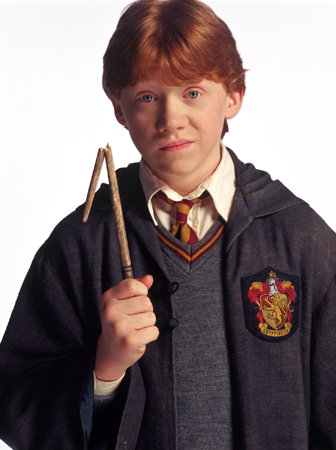
This is the boisterous chant of the Slytherin team, J.K Rowling's depiction of the bully-based squadron whose primary goal in the Harry Potter series is to rub Gryffindor's noses into the ground every conceivable moment at Hogwarts School of Witchcraft and Wizardry.
Breaking it down for those who have not bothered with the collection, the chant is derived from what escalates during the fictitious Quidditch, the school's seasonal sporting event, where flying brooms are mandatory and one specific player, the Seeker, must grab a flittery-winged small golden ball to win the match.
If imitation is the highest form of flattery, Rowling should be thrilled: Quidditch has now become an actual sport. Brooms and snitches don't elevate from the ground, but that doesn't stop these imaginable Potter fanatics from attempting to live out their storybook glory.
As the fan base strengthened in numbers over the past decade, so did the potential of establishing the earthbound variation of Muggle Quidditch.
Just as other groups associate their flockings with the addition of '-head' onto a word that's spoken most and widely known - indeed, Mr. Potter has captured the young spirited hearts of every country, establishing themselves as Potterheads.
"If you're a Potterhead, you get the same response when bringing up Harry Potter in non-Harry Potter circles, 'Oh yeah, I read book one and it was okay, and I've seen some of the movies and they're alright,'" said 25-year-old Steinberg. "That used to be my response too."
While the series first debuted in 1997 and now up to date has sold over hundreds of millions of Rowling's seven books combined, Steinberg didn't start reading them till three-and-a-half years ago. "When I first started dating my boyfriend, he told me that I needed to read them," said Steinberg. "If I wasn't going to do it on my own, he was going to read them to me."
Steinberg was hooked: for the first six months or so of the relationship, her boyfriend read the books aloud to each other every night. When the final installment: HP and the Deathly Hallows came out, Steinberg joined in, and they both read the chapters.
Setting out to find others who enjoy the same, Steinberg began attending 'Wizard Rock' concerts, a new genre of music dedicated to Potter. " They did an amazing job of drawing from not only the characters and the humor, but also the emotions and the wonderful lessons," she said. "That is what I think brings me back to the books."
From The Remus Lupins to the Whomping Willows, Steinberg started attending more shows on the quest to seek out others such as herself. "I was frustrated with my lack of Potterhead friends," she declared.
After having spent a night dining with six other fans post concert, Steinberg kept in contact with them online. A couple weeks later, she read her new friends had requested a game of Muggle Quidditch. Jennie jumped on the prospect, messaging them and insisting that they invite her.
Told to 'Bring Your Own Broom' and chip in a few dollars for a BBQ, Steinberg showed up at a house with a broom in hand. "A girl ran out asking if I was there for Quidditch," Steinberg said. "I joked, 'Nope! I'm here to clean your house.'"
Walking into the backyard, she noticed the set-up of mid-air hoops, which were really just hula hoops duct-taped to PVC pipe held up by sand in buckets. A pair of three hoops sat on each end of the yard, and people were already there scrimmaging. Using a volleyball as a Quaffle, they were thrown into the opposing side's hoops for points.
Sometimes the adaptions are interesting. "The snitch can be a moving person, or a remote control car and helicopter," Steinberg said. With attempts at Quidditch as a water polo sport and rigging up a harness to fly, Potterheads always envision new creative ideas.
Steinberg was ready to play. Chosen as a beater, her job was to throw dodgeballs at the chasers, who are attempting to throw the volleyballs into the goals. "It was very high intensity," she recalled. "There is so much going on in the game, it was really chaotic and fun."
Many U.S. universities are now involved in a Intercollegiate Quidditch Association, and several attended the 2008 Quidditch World Cup, as also the sport is growing recognition in youth camps worldwide. It even prompted Greg Gumbel to go do a play-by-play of a Quidditch tournament for CBS News a year ago; that is when the Muggles of the real world finally learned of Quidditch.
There won't be any spells flying around, either. "I may have tried to use the summoning spell to steal the bludger," Steinberg said. "Accio!"
Monday, March 30, 2009
This American Life Live: Interview with Seth Lind

Imagining public radio as exciting is probably uncommon to most of the 'New Silent Generation.' While most find themselves sliding their thumb along the circular pad of an Ipod, many would admit to not bothering with skimming through radio frequencies anymore; it's just a sign of the times.
In comes two radio gurus, Ira Glass and Seth Lind with the generational across-the-board favorite, This American Life, a radio show with a certain flavor all ages can attest to enjoying.
Glass, a host and producer of TAL, spoke at Yale University recently of the need for aesthetics and witticisms in the media to keep our audiences tuned in and plugged what Lind, a production manager for TAL, is currently working on day and night: creating a live stage adaptation of the show to take place on Thursday, April 23rd in New York City. Being transmitted over satellite to 450 movie theaters and performing art centers, this will mark the second time that Lind has attempted such a production.
“Producers have struggled with describing the content since the beginning of the show,” said Lind over the phone of the perplexing mission of explaining This American Life, which has been on the airwaves since 1995. “They're amazing stories about people who wouldn't otherwise be in the news.”
Making an example of how a general public radio newscast would simply focus on the political and institutional aspects of education, Lind spoke of what made TAL different. “We would do a story specifically on what notes were passed in class and what the kids in the hallway were talking about,” he said. “That's what we care about, the under story.” This American Life validates a certain part of storytelling that people are interested in; something most other programs lack.
Just how popular could a public radio show be in the era of newfangled technology? Ever since TAL became available in podcast format a couple years ago, there are 500,000 more listeners thumbing through their Ipod for an hour filled with curiosity and wonder instead of a Top 40 pop ditty. “The average age of the podcast audience is 15 years younger than the radio [audience],” said Lind. “It's insane.” Admittedly, the show as a whole draws in a younger crowd compared to other public radio.
And just like that, the listeners respond back in a frenzy, giving kudos to the TAL crew and requesting appearances; the fans are the driving force behind the creation of the live shows. “We did it last year for the first time, and didn't know how it would go,” Lind explained. “No other radio show had ever done it. We showcased stories from our upcoming season of television (on Showtime) because we wanted to take advantage of the fact that it would be in high definition and had all these pretty stories to show, and some radio content. It was incredibly expensive and a big risk.”
The event paid off: as 32,000 showed in attendance, TAL were flooded with even more messages post-event, asking when 'this wonderful event' would happen again. Lind and senior producer Julie Snyder rolled up their sleeves, and began to plan the next live endeavor.
“So the stage show, is like an actual radio show,” said Lind. “It's an extended, inflated two hour long one with a theme.” The theme for April 23rd's show is set to be 'Return to the Scene of a Crime.'
Other than that, Lind was cryptic and would not divulge any secrets, including one about a 'top secret special investigation.' “It's totally top secret, but I can tell you I was just working on it,” he laughed.
Drawing back a breath, Lind admits to the constant back and forth, everyday labor put into the show set to take place in NYU's Skirball Center. “It's a huge effort, and it's still happening, and it will be until the minute it hits screens,” he said. Almost 100 stations nationwide that broadcast TAL will be promoting movie tickets ($20) and pledge drives to have listeners become members of their stations.
Stating simply that the audience will get to see people rather than just hear their voices, Lind was not able to tell what the performers would be specifically talking about. Instead, he gave comical anecdotes about some of his first encounters with them as a college student.
Having missed a speech of Glass' at Lind's college in 1997, Lind ran into Glass again when applying for a radio internship in NYC in 2007. “Ira was there hanging out, and was like, 'Hi, I'm Ira Glass,' and I was like, 'I'm Seth Lind.' My first impression was that he looked really normal, kind of how I pictured him to be by just hearing him on the radio.” he said.
Another performer for the show, Dan Savage, has a syndicated relationship and sex advice column called Savage Love, and as a young adult in college, Lind used to procrastinate and read it. After he had read Dan's response to a reader saying that there was no such thing as a platonic massage, Lind wanted to be a smart ass and wrote back saying there was. “He [Savage] wrote me back instantly and was like, 'Bullshit.' I was amazed at how fast he responded. Now that I work with him, I can't get him to. He'll respond to some random college student but won't sign his contract.” recalled Lind.
This American Life Live's seating at the Skirball Center sold out in one day at $50 bucks each, but Lind contests to the movie theater experience being much cooler. “There's six cameras with a live director cutting in between them, swooping and moving around,” he said. “Everyone should sit two-third's of the way back in the middle (of the theater.) That's where everyone should sit.”
“This is a big surprise and I shouldn't say it, but,” paused Lind. “We found a way to transmit beer over satellite; it's going to be coming out of a certain part of the screen,” he joked. “If you bring a cup, you'll be all set.”
Saturday, March 21, 2009
March To The Pentagon

Photo Cred: Karyn Danforth
“No justice, no peace. End the war in the Middle East!” rang the voices marching in unison. Looking around the chaotic cluster of people while snapping photos, my morning ran through my head like a running dialogue.
Passing by the homeless shelter as we arrived in Washington D.C, a line snaked its way up and down the sidewalk; residents with backpacks in tow waited patiently for the doors to open. It was eight in the morning, and I sat inside the bus, rubbed my eyes, and continued to stare out of the window.
After our bus driver stopped for breakfast, I boarded the bus again, sipping my burnt coffee in hopes that it would make up for the tossing and turning night of cramped sleep in that window seat; the Progressive Student Alliance trip to Washington had left Central Connecticut State University's campus at one in the morning, having drove all night long with just a couple pit-stops.
As fliers were handed out to students, voices filled the air about socialism and unions. Looking down at the piece of paper, it mapped the streets and locations where the march to the Pentagon began and ended; the march was an anti-war demonstration marking the 6th anniversary of the occupation of Iraq.
While everyone chattered around me, I had nothing to speak about; I felt uninformed, invisible. It wasn't long though until Marissa Blaszko, a fellow Central student, introduced me to the entire clan. Lamens terms didn't really seem to apply to the subjects that Blaszko and other students were rapidly firing at me; I felt as if I needed an Activism for Dummies handbook at my side to thumb through the definitions.
From a completely novice view, all I could really comprehend was the fight for unions to be recognized, and the general distaste for the government. Some students were socialists, like Jeremy Radabaugh, a Kent State graduate whom worked for unions in Ohio and Connecticut. Jeff Bartos, a medic from the Iraq War, was a veteran against occupation, while others were either from Youth for Socialist Action, or unaffiliated; merely going to enjoy an activist movement.
A few slight detours later due to cycling marathon, we shuffled off of the bus; one individual was handing each person picket signs that read different slogans: “Stop U.S Wars,” “Occupation Is A Crime,” and “Fund Jobs and Human Needs.”
Taking a long winding walk towards the National Mall near the Lincoln Memorial, we passed the Federal Reserve, and the Washington Monument began to appear. The cherry blossoms framed the old architecture.
Arriving earlier than anticipated, a few of us decided to wander in and give Mr. Lincoln a visit. The reflecting pool didn't look in tip-top shape, but then again, the dead grass surrounding it was typical during the month of March.
Gathering information cards on the monuments from the information desk, we chatted with the older lady at the booth for a while as we watched robotic runners fly by in their striped running shorts, and looked above to see planes overpass every few minutes.
People from all over the country began flooding the Mall; booths filled with literature about socialism, anti-occupation and going vegan were lined up in rows. Specific groups were in attendance: from Code Pink to Veterans of War, interesting signs and demonstrations were happening at once. One accessory that adorned many necks of protesters was the kaffiyeh, a Palestinian scarf consisting of black and white stitching.
Groups approached us and handed out pamphlets, there was also a massive stock pile of different picket signs for anyone to grab. As a small army of individuals moved a giant banner displaying the words “Stop All Wars: Billions of Taxpayer Dollars Wasted,” a petite, older African-American woman sang into a megaphone, “What are we fighting for? This is a rich man's war.”
Among the other sights was an older man with a beret and sunglasses in a motorized chair, holding a sign saying “The Pentagon Pillar Pillage Horror,” in heavy red marker, a group of artists with abstract drawings symbolizing some of Picasso's Guernica, and fake coffins draped in flags representing those civilians or soldiers who have died.
Thousands were clustered, listening to an array of protest speakers: bereaved parents of deceased soldiers, rappers and preachers, and even foreigners protesting the building of U.S military bases in their countries. Around 30 speakers and two hours later, the crowd was growing impatient; they were ready to march.
Aligned a few feet away from the mall were seven horse mounted police officers. Ignoring them, the crowd passed the Lincoln Memorial and over the bridge en route to the Pentagon. Empowered fists pumped signs into the air, many helped carry the coffins together, and megaphones lead vocal testaments to the grief and frustration fueled alliance of bodies.
“Who's streets?” questioned the loud amplified voice. “Our streets!” replied the crowd.
Adrenaline took over as I snapped photos of these twisted faces of defiance. Stepping to the side to glance back as we walked further, a massive serpent-like line of bodies twisted back as far as I could see. Media helicopters flew above our heads, and then we found ourselves running up a hill to a highway overpass to get the ultimate view of the event.
Running back down and continuing further, Blaszko began to yell into the megaphone. This caught the interest of a Palestinian woman and her three small boys. Looking over at the woman, Blaszko held out the walkie-talkie device attached to the megaphone up to her and said, “Go ahead, say anything you want.”
“Free Palestine!” declared the woman. Offering it to the boys, one of them took it and piped up, “Stop killing children!” A chill went down my spine.
The march wasn't actually to the Pentagon, but it was passed by. Instead, they continued towards the headquarters of a building that manufactured guns and artillery to protest outside and lay the coffins beside it. Passing through Arlington, Virginia and into the downtown streets, people peered out of their apartments and skyscrapers to catch the commotion.
Riot police were everywhere lined up on the streets in full combat protective suits; even a cop in a tank made an appearance. Nabbing some free bread from a group of anarchists, we arrived at our destination. People swamped the entrance of the building, or as much as they could, for the riot police convened and began attempting to push everyone away.
The coffins were placed, but not even moments later the police began walking over, even kicking them. Threats were surfacing about the potential threat of tear gassing, to which my phone rang. “Get out of there,” said Blaszko. “Head back towards the street!”
Fortunately enough, this did not occur; the march was finished. Sunburned and sore, the group reconvened at a restaurant to regain some strength in the form of noodle cuisines. After eating and regaling our individual experiences, we sluggishly boarded the bus to return home.
Conversing and playing word games with everyone on the bus, we all participated and laughed at absurd jokes; albeit once intimidating to me, they were a thought-provoking group who included me and treated me kindly. Pre-departure, it was a mystery, but now it was an enlightenment.
Monday, March 16, 2009
"Well life's a train, it goes from February on, day by day, but it's making a stop on April 1st."

"April Fools"
Rufus Wainwright
Self-Titled, 1998
"Cross My Heart"
The Rocket Summer
Calendar Days
Waking up to chill wafts of air from an open window instead of a dusty fan is revitalizing; spring is creeping around the corner and into my lungs.
After not bothering to pay attention to the weather forecast during the New England freeze (There's snow on the ground. Okay, sweatshirt and pants.) I find myself clicking the 10-day forecast profusely while sitting in a bathrobe, waiting for Mother Nature's word on what I am allowed to accessorize for the day.
Certain aspects of our lives change with the season; we slough off the long johns, bulky boots, restrictive mittens and gloves. Materialism aside, many even opt for a change of tune.
During the not so sunny days of darkness after 5p.m, the music in constant rotation was that of a more mellow, guitar twinged sound: M. Ward's 'To Go Home' had me longing for my father's rural home in Massachusetts, Matt Pond PA's "Halloween" reminded me of my isolatory ways in public situations (not being able to speak at parties where socialization is out of the question), with every song comes an accompanying thought.
Once the temperature creeps up to 50 degrees, it's as if that overthinking fold of the brain decides to go on a vacation, yet checks a Blackberry daily for updates on the body's functionality. Another section of the brain sits in for the other on leave, but this one isn't employee of the month material, this little guy wants to kick his feet up in the cubicle and have a nice drink.
This is when the musical maniac in me begins to crave lighter, flow-through-your-room airy delights; songs reminiscent of the better days. Even though I am constantly trolling the music industry for new artists, during the hotter months I tend to pull out favorites that remind me of past summer memories. As a certain smell can trigger a figment of something once thought forgotten, music has always been a major firecracker that helps one remember an ex-significant other, a childhood home, and even a deceased loved one.
There is a warmer weather memory I have thought of constantly recently, and have tried my best not to be too melancholy over: driving solo in a car with no destination in mind, with the windows down and the stereo cranked. The two songs at the top have found their way into my past automobiles during these months for the past four years, where I loudly sing along tit for tat, note for note. Being momentarily without a vehicle, this could pose a threat to my ritualistic pleasures.
For this, I have found a temporary solution of planning walks, hikes, camping trips, and I can still of course enjoy my upbeat selections while being a trooper and taking public transportation. I may have to resist the temptation of singing, a stranger would probably tell me to not quit my day job, and then I'd overthink the reasons I don't have one.
Wednesday, March 11, 2009
From Flying to Jiving: Ornithopera, Aviary's Final Migration

Set up in one corner of Maloney Hall’s second floor art gallery was four tables of piano harps: the gutted insides of the giant grand instruments. “It’s a pretty amazing invention,” said Wesleyan University graduate student Max Heath. As his hands rested upon a large block of glass, Heath moved it across the piano strings as a camera projected the glass and strings onto the wall behind him. “I hardly have to move the glass to create sound,” Heath said.
This was only an element of Michael Pestel’s multimedia installation, Ornithopera, a closing performance of his exhibition Aviary, which drawn upon the lost voices of endangered and extinct bird species is also a celebration of the ones still alive. In the orchestrated event, it is scored for a minimum of 31 sound and a couple movement performers with additional participating members of the audience.
Students and faculty from Central Connecticut and Wesleyan were aligned against each side of the galley with different instruments, the majority being handcrafted by Pestel. Opposite to the piano harps were slate drawing tables and an upright piano; the other two contained of a row of typewriters and slate writing podias, which consisted of a board of holes with a mixture of stones in each.
The audience laid inside these four walls of sound, and eight performers with assorted string and wind instruments were inside of them centered around a bird cage atop a circular moving platform.
Giving background information to Ornithopera's significance, Pestel spoke to the audience outside the center of the circle he'd eventually step foot in. “The most important thing about this is listening to the lost voices, the voices of extinct birds species that have disappeared,” he said. “These species have been eradicated since the 1500's by the United States. We're moving into a world it will all be gone; 50% of all animals will be endangered and extinct by the end of the century.” Pestel posed the questions of what should we think and do about it.
Pestel urged audience participation with slates and chalk to create their own additional noises. The [slates] weren't ordinary however. Dan Yashinsky, a Toronto based storyteller, told the audience a tale of his mother, and the slates were saved from her roof; they were perched on by eight decades of birds.
Two 'Butoh Slowalkers' (movement performers) slowly made their way around the perimeter of the room; as they crossed an instrument, it signaled the noises initiated by each student. On the upright piano, Brian Parks, a concert pianist and composer, pounded down random patterns of notes at the same time; each note represented a letter in the Latin spelling of the species of birds. Briskly typing away bird proverbs into the old-fashioned typewriters, CCSU Art History professor Dr. Elizabeth Langhorne's Eco-Art class also chanted little utterances under their breath.
And just like that, Pestel was moving back and forth, using various instruments as he strolled around the wavelength in satiated room; his two-year old daughter Josey dawdled around holding a baby doll, ran to Pestel and, still playing his instrument, swiftly scooped her into arms and carried her around. He then stepped to the center and sat down with the eight performers, which was the initiation of the audience to partake. Chalking it up, some did rhythmic beats with straight lines, some went more free-form and curvaceous onto the slate. While the performers inside the circle kept to one instrument, Pestel used several bite sized items; mixing the melange of noises in the air. Pestel pulled out a traditional flute, Josey crawled into his lap with a doll still clutched in her hand.
All of the different sounds did seem a little intoxicating, enhanced by glancing at the videos projected on the walls of Pestel's various close up experiences with birds; playing an instrument as the bird chirps back at him. The sounds lasted for a couple Butoh Slowalkers rotations; about 20 minutes worth of ears ringing with high, low and clinky clanky noises. For what was seemingly a grand finale of sorts, Pestel arose from his seat, walked over and stood next to a gong, and shot an object out of his flute, symbolizing the end.
When asked little Josey how she thought dad's performance was, she smiled timidly, climbed over a chair, and was too busy being innocent to comment.
Tuesday, February 24, 2009
Spinning In the Fish Tank
Walking through the student center of Central Connecticut’s campus, a large glass window draws curiosity to each passerby.
Peering inside, guiding one’s eyes around the room of expansive radio equipment, there in the center sits a brown banged petite girl with headphones on. As a song ends, she fiddles with the soundboard, presses a button, and puts her mouth next to the microphone.
“You’re listening to WFCS 107.7,” said a calm, serene voice. “The name’s Kait Jensen, and welcome to my show, Strange Sounds,” she finished.
Immediately after the last syllable, Jensen punched another button, and the first notes of a song began to resonate through the station. As a junior majoring in English, Jensen has been working at CCSU’s radio station for over a year. Currently sporting the title of Alternative Director of WFCS, Jensen hosts her own radio show on Wednesday nights from 8-10 p.m.
Heavily involved in the station, Jensen is also currently training to become the Director of Development, as well as the treasurer position for next semester. Jensen enjoys the power she possesses as she switches from song to song.
There is more freedom in college radio than [in] commercial,” she said. “Students can listen to music they wouldn’t hear anywhere else.”
With a heavily influenced mélange of indie favorites like Neutral Milk Hotel, Caribou and The Pixies, Jensen fills the airwaves with unique sounds.
“I get phone calls occasionally,” she said. “But they’re generally from people asking me to play Coldplay,” she said, as she usually tries to steer away from mainstream favorites. As Jensen frequently stops to give the tag line and play public service announcements, she doesn’t seem to get nervous about her voice reverberating through the hallway of the Student Center – where hundreds of students and faculty stop to curiously peek inside as they scamper back and forth from classes.
“Sometimes I get reactions through the window,” Jensen said, referring to the fish tank. “I like to press buttons when people walk by and I get weird looks,” she laughed as she demonstrated by pressing a button that let off a screaming noise.
Outside of the station, Jensen is also currently attempting to organize shows to take place on campus, trying to bring bands in an effort to get students more involved in supporting their student organizations, and to just have fun. Presently, the station is undergoing a lot of improvements, as they hope to use another vacant room adjacent to the main station to showcase local bands, treating their listeners to live performances.
With many individuals currently working to keep the station afloat, WFCS is constantly putting their heads together to explore new ideas to revamp the studio and keep radio alive. “It sounds like such a cliché thing to say, but we’re like a family,” Jensen laughed, “ – an interesting one, at that.”
Peering inside, guiding one’s eyes around the room of expansive radio equipment, there in the center sits a brown banged petite girl with headphones on. As a song ends, she fiddles with the soundboard, presses a button, and puts her mouth next to the microphone.
“You’re listening to WFCS 107.7,” said a calm, serene voice. “The name’s Kait Jensen, and welcome to my show, Strange Sounds,” she finished.
Immediately after the last syllable, Jensen punched another button, and the first notes of a song began to resonate through the station. As a junior majoring in English, Jensen has been working at CCSU’s radio station for over a year. Currently sporting the title of Alternative Director of WFCS, Jensen hosts her own radio show on Wednesday nights from 8-10 p.m.
Heavily involved in the station, Jensen is also currently training to become the Director of Development, as well as the treasurer position for next semester. Jensen enjoys the power she possesses as she switches from song to song.
There is more freedom in college radio than [in] commercial,” she said. “Students can listen to music they wouldn’t hear anywhere else.”
With a heavily influenced mélange of indie favorites like Neutral Milk Hotel, Caribou and The Pixies, Jensen fills the airwaves with unique sounds.
“I get phone calls occasionally,” she said. “But they’re generally from people asking me to play Coldplay,” she said, as she usually tries to steer away from mainstream favorites. As Jensen frequently stops to give the tag line and play public service announcements, she doesn’t seem to get nervous about her voice reverberating through the hallway of the Student Center – where hundreds of students and faculty stop to curiously peek inside as they scamper back and forth from classes.
“Sometimes I get reactions through the window,” Jensen said, referring to the fish tank. “I like to press buttons when people walk by and I get weird looks,” she laughed as she demonstrated by pressing a button that let off a screaming noise.
Outside of the station, Jensen is also currently attempting to organize shows to take place on campus, trying to bring bands in an effort to get students more involved in supporting their student organizations, and to just have fun. Presently, the station is undergoing a lot of improvements, as they hope to use another vacant room adjacent to the main station to showcase local bands, treating their listeners to live performances.
With many individuals currently working to keep the station afloat, WFCS is constantly putting their heads together to explore new ideas to revamp the studio and keep radio alive. “It sounds like such a cliché thing to say, but we’re like a family,” Jensen laughed, “ – an interesting one, at that.”
Friday, February 20, 2009
Women Can Be Funny, Too

“I was a musical virgin until now,” quipped the eccentric, silver haired woman on stage.
“Have you ever heard the song ‘My Neck, My Back’?” she asked the audience. “I played it for a friend of mine, and her 16-year-old daughter yelled at me, ‘You can’t play that for my mother!’”
There was no silver bell tinkling laughter from the women in CCSU’s Alumni Hall; there were bold, thunderous shrieks and wails.
“Silver bell tinkling laughter happens when we’re around men,” Regina Barreca, author of “Babes In Boyland” and “I’m With Stupid” explained.
Acting out a man who had a terrible, absurd joke to tell, she then switched roles to the woman being forced to listen. Out of her mouth came a squeaky laugh that Disney princesses perfected.
Barreca, a professor of English and feminist theory at the University of Connecticut, is dedicated to focusing on women’s trials and tribulations, yet she fails in coming off too feminist. Barreca combines her wit and knowledge into a comedy routine that can make the most uptight woman or impossible man unravel.
“Real laughter from women has a slightly less feminine sound,” Barreca said. “Some definite signs are bust holding, mascara wiping, and the exclamation, ‘Don’t make me pee my pants!’”
Her topic of the afternoon was exploring women and comedy; how men find it difficult to believe that the opposite sex has a sense of humor. For 20 years, Barreca has investigated why men don’t find women humorous. Narrowing it down to three reasons, she showcased ridiculous pop culture references that, while men find them funny, women are turned off and reject them completely.
“Women don’t like the ‘Three Stooges’, the fart scene in Blazing Saddles, or Jackass: the Movie,” she said.
Mentioning the scene in Jackass when one of the men is walking over an alligator pit with a Perdue chicken in his pants, Barreca asked, “Can you imagine a woman putting chicken fingers in her brassiere? No, women don’t do it.”
While some women might contest to actually enjoying atypical male-driven antics, realistically it is because they want to be ‘one of the guys.’ There is nothing wrong in this, but women need to understand that enjoying it doesn’t automatically make them a hit at the water cooler.
“Men torture each other,” she said. “Women nurture. We don’t insult other women; we compliment each other. Then we explain why the other is wrong for complimenting us.”
Barreca explained how making things up is unnecessary in our everyday lives that are filled to the brim with hilarious anecdotes.
“Women make a story about everything,” she said nonchalantly. “We don’t tell jokes, we’re not genetically inclined. Women being forced to be funny is like cross-dressing.”
“We’re lying and being disingenuous to ourselves,” Barreca said, singling out her gender in the audience. “We try to minimize; we tend to think we’re too much.”
To be meek and modest is not in Barreca’s profession. When interviewed recently by BBC about the global economy, Barreca’s solution was simple: “Allow middle-aged women to spend money on clothes that fit them!” she said as a matter-offactly. “That will bring a flood of liquidity back into the market.”
A side note that sent the audience into a fit of gender seperation was the accusation that women can’t handle money.
“I googled ‘men can’t handle money’, but it just comes up with how women can’t,” Barreca said. “Haven’t we seen the former evident in the economy currently?”
Diverting her animated character into another story, Barreca spoke of an interesting moment in her life when she tried something just to have a comical story to tell. Living in London for two years when she was a young adult, Barreca was a freelancer, and had an attractive British boyfriend in tow. She was approached to be a contestant on a television show called “Mastermind”.
“’We’ve never had an American on before,’ they told me. ‘You’ll make a fool of yourself,’ my boyfriend contested. I accepted.” Barreca said. As they fired questions at a young Barreca, she realized she didn’t know the answers, and would utter ‘pass’ after each.
“They were watching this American girl setting herself on fire,” she told Alumni Hall. Sensing how uncomfortable it was, the show’s host switched subjects and asked, “What animal is a guppy?” “It’s a fish!” Barreca yelled at the top of her voice, and the crowd went wild; she said little old English ladies approached her in the supermarket the next day, fawning over her television appearance.
As embarrassing, awkward, or odd it may have been, Barreca wanted to reach out to the audience to urge them to do anything and everything; that life is just a series of hilarious anecdotes and situations. “It’s a story,” Barreca said. “Do it. Go out.”
Tuesday, February 3, 2009
Super Bowl at Southwick Inn

Aside from the fierce competition between two teams that tackle their way through their respective conferences and into the hearts of many, Super Bowl Sunday is not just for sports fanatics. While it’s sponsors inject entertainment in the form of musical performances and expensive commercials, the rest of the excitement is up to the individual. Deciding how and whom you spend the event with is probably the most important aspect in order to having an enjoyable evening. That, and the spicy buffalo wings.
Some of us make this decision haphazardly the last minute, and I am guilty as charged. As a generalization, several of my fellow female demographic can agree with me when I admittedly never care much about football until the final game fever surfaces. That is when we muster up a grin, don a jersey of a random wide receiver, and cheer along with our drunken male counterparts while forgetting about our New Years resolution of losing weight.
Not having any plans three days prior to the game, my father contacted me about spending my weekend up where he resides in Southwick, Massachusetts. When I questioned how we’d be spending our Sunday night, he mentioned we were going to a party. A party at a bar, The Southwick Inn, one of the oldest bars in Western Massachusetts. It has been open for 100 years, but was recently renovated a couple years ago; before its current owners, it was disgustingly intolerable.
Partying with a bunch of inebriated strangers doesn’t sound appealing at first, if at all. After getting our fill of Animal Planet’s Puppy Bowl, my father, stepmother and I left for the soiree with a homemade bowl of buffalo chicken dip that my stepmother had creatively baked to contribute.
When we arrived at the Inn, I was, without question, the youngest person at the bar. Sitting down on a stool next to an older man grunting his order of a hamburger and onion rings, I sat and sipped my draft beer, surveying everyone on the scene. Since my father visits the Inn quite frequently, he pointed out the obscene regular bar flies; the bartender fixed their drinks before they sauntered through the entrance.
The first hour before kickoff felt like an eternity; a woman in her mid-twenties blared the Dropkick Murphy’s “I’m Shipping Up to Boston” on the jukebox and others followed suit by bopping their heads to the heavy Irish tone and downing their light beers like camels in heat.
Switching all flat screens to the game, there was General Petraeus, all prepared to initiate the coin toss. (Initiate sounds like the astute word to use when speaking of such a prominent man.) As this happened, I overheard bar patrons wager bets. “100 bucks for tails,” one quipped. “No, a dollar,” said the other.
While several laughed at guessing how old John Madden must be by now, the game started and all were transfixed, including myself. I was rooting for the Pittsburgh Steelers, and for the most pathetic reason imaginable: I recently visited the city and absolutely loved it, and spent some time in a restaurant where every customer adorned a Steelers jersey, even Grandma. Sorry Cardinals, I know you haven’t won in a while.
Throughout the evening, Jess our bartender handed out freebies, like t-shirts and football helmet necklaces. An entire table of free edibles was set out to enjoy in unlimited helpings: chips, dips, veggies, wings, cookies; even chicken marsala. What got the most feedback from the majority of people however, was the buffalo chicken dip.
I am proud to mention that I got extremely into the match, albeit getting distracted by the hamburglar beside me, speaking to me about college, the economy, and politics. Intermittently glancing at the commercials, my favorite featured the dating Clydesdale horses: there is nothing cuter than animals helping sell beer to Americans.
The rest of the evening seemed a little fuzzy: like what Troy Polamalu must have experienced after losing his contact lens in the first quarter. Luckily I did not pay attention to Bruce Springsteen’s crotch-o-vision, and eventually we left prematurely before the fourth quarter began. I was tuckered out, and ready to leave.
The Southwick Inn is a bar with extremely good people just wanting to have a good time; the food is hot and the beers start at $2.50. Overall a nice atmosphere to just get away from the frustrations and laugh freely.
Maybe I’ll prepare for next year by picking a team, watching their season, and hoping they make the playoffs. Probably not.
Visit the Southwick Inn's Myspace: http://www.myspace.com/thesouthwickinn
Subscribe to:
Posts (Atom)